Category: Chronic Pain

  • 5 Reasons NOT to Straighten Your Spine

    5 Reasons NOT to Straighten Your Spine

    [spacer height=”20px”] If the end of summer is inspiring thoughts in you of “straightening up” and getting your act together, these tips are here to lighten the load and make the process more relaxed and easefull… 
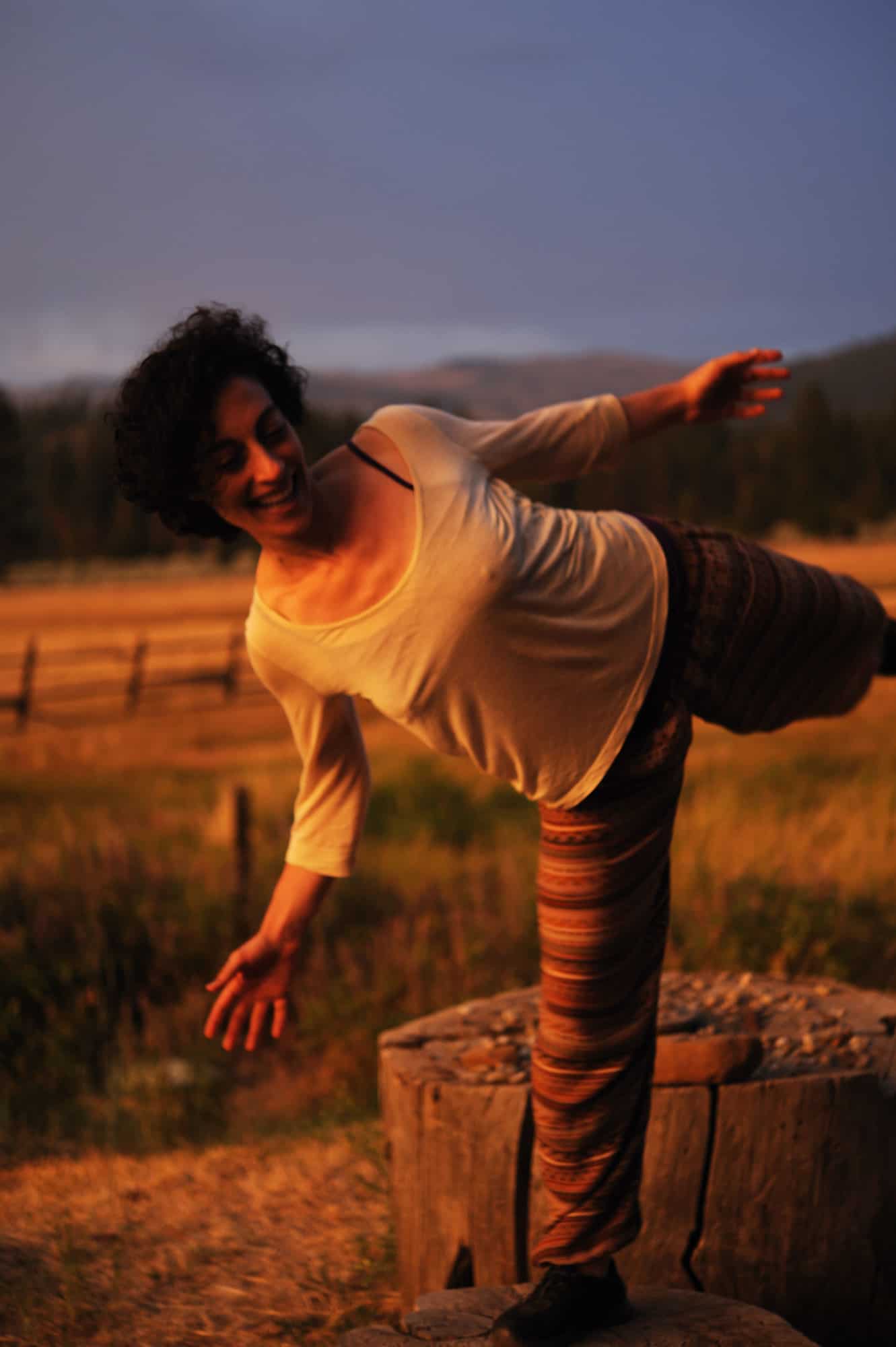
    photo by AlexaRazma.com
    photo by AlexaRazma.com

    [spacer height=”20px”]More than two-thirds of the folks who come to see me about chronic back pain share these two characteristics:

    • They claim to have bad posture, and therefore
    • They try to straighten themselves up throughout the day

    The straightening up doesn’t seem to improve their alignment in the long run, and it certainly doesn’t do much for easing their pain. And yet it also doesn’t always occur to them that trying to “fix” their posture by “straightening up” is actually contributing to the discomfort and making it a “fixture” of their lives.

    Here are five good reasons NOT to straighten your spine, especially if you’re looking to improve your alignment and find more ease and release in your body.


    1. Your Spine is Curved to Begin With

    Your spine is curved, not straight, and that’s a very good thing. The four curves of your spine – sacral, lumbar, thoracic and cervical – are precisely what makes it so strong and able to support your weight in an upright position.

    If you’ve ever been to any kind of fitness class, chances are the teacher has used an image at some point to help you visualize the movement you’re going for. That’s because your body responds well to images, especially when they’re relevant and tangible to its experience.

    But since the image of a straight spine has nothing to do with the reality of your structure and isn’t a tangible or even desirable goal by any stretch, you’re better off without it.

    Your time and effort are much better spent getting to know the particular curves of your spine. This means cultivating mindfulness of your own body, and accessing imagery that is true to your experience in the moment. This kind of imagery is much more effective when it comes to helping you sense the placement and possibilities of your alignment.

    And if you’re looking for realistic solutions, keep this in mind:

    Alignment and support aren’t actually about position – they’re about relationship.

    This is as true for your body as it is for your heart. And mind.

    When it comes to your spine, as you begin to literally “see” your curves, you also begin to learn how to adjust the relationship of one curve to another so that your weight is better supported.


    2. Straighten Up? What about Down?

    Our Western culture has a fixation with reaching up – we don’t even realize the extent to which this spiritual concept ends up infiltrating the way we move and carry ourselves throughout the day.

    But anyone with any understanding of physics – scientists, building contractors and dancers alike – will assure you that there is no such thing as “up” without “down”.

    You can reach up all you want, but getting more length in your spine requires grounding.

    Unfortunately, when we command ourselves to straighten up we tend to completely forget about reaching down. And so the musculature of your upper body – i.e. your neck and shoulders – ends up having to carry much more mass over long periods of time than it’s really built for.

    No wonder your neck and shoulders are sore – they’ve literally been “weight lifting” all day!

    Next time you feel the urge to straighten up, just take a quick moment to see if there’s space for your hips to relax down and if you can feel the weight of your body dropping through your feet. Taking that extra weight and sending it down with gravity where it belongs will do at least half the work of releasing your spine and giving it more space to lengthen.


    3. You Move in Circles and Spirals, Not Lines

    Here’s another misleading image that’s constantly being thrown at you.

    As with trying to “straighten” your spine, you’re told reach your arms out and extend your legs as if they were linear masses on linear tracks, and the more you force the alignment, the more aware you become of how tight you are.

    When in fact your movement relies on round joints! And the way to release your joints, especially the joints of your spine, is NOT to lock them in a straight line, but to make sure they have plenty of space for round, juicy movement.

    What’s more is that there isn’t a single bone in your body that resembles straight. In fact, if you look at the bony structure of both your lower arms and lower legs, you’ll notice that the bones – radius and ulna in your arms and tibia and fibula in your legs – have a spiral-like movement around each other.

    The way you walk is also a spiral action, a double helix resembling the very structure of your DNA. Notice when you’re walking that as your right leg strides forward it’s your left arm that’s swinging forward – this is one simple way to tune in to the spiral movement that your spine conducts throughout the day.

    Yoga, Qi Gong and other ancient movement modalities have a lot to say on this subject, but it’s enough to observe your walking to begin to sense it for yourself.


    4. Fixating Leads to Pain

    Another great reason NOT to fix your alignment by straightening up is that alignment is never fixed. You live in a moving universe, on a moving planet, in a body that’s made up of trillions of moving particles. Good luck fixing anything into place, ever.

    Fixing and fixating (on posture or anything else for that matter) are bound to lead to pain because they involve holding, which requires an immense amount of energy.

    The joints of your spine are built for an incredible amount of movement. We’ve already talked about up and down, but sliding your right arm down your right leg will quickly reveal your capacity for movement from side to side, craning to look up or leaning forward to pick something from the floor will give you a taste of forward and back, and turning to look at someone behind you is a great way to experience movement around your central axis.

    The way to less pain and more ease in your spine is more movement.

    Instead of trying to hold yourself upright or in any other position, be greedy for movement. If you feel yourself slouching or getting tight, get up and walk around. Follow stretches and exercises you’ve learned or invent movements yourself which open up your awareness to all the possibilities of movement you haven’t been exploring while sitting at a desk and walking down straight, narrow hallways.

    If you’re not sure what stretches and exercises to do and don’t feel like inventing them on your own, consider coming to work with someone like me. I help people create personalized toolkits to serve both their everyday and long-term needs, and my upcoming Semi-Private Group Session – RELAXED Strength & POWERFUL Alignment is all about learning how to strengthen, lengthen and release your spine.


    5. Your Breath – Not Your Muscles or Your Mind – is What Holds You Aloft

    Your breathing is the underlying movement that keeps you going: it’s happening all the time (though maybe not as fully and elastically as it could be if you’ve been in front of a screen or sitting at a table for hours) and giving it a little bit of attention is likely to give you a lot more reach and relief than sucking-in in order to straighten up.

    Since we’ve already established that more movement is more better and that your breath is at the root of your movement, it naturally follows that more breath is best of all.

    Unfortunately we spend large parts of our day breathing very little. And being out of practice, we’re surprised (and maybe even put upon) at the suggestion that this is a part of our lives that requires diligent focus and intention. It’s not until we’re exasperated with pain and forced to do nothing but breathe that we begin to truly appreciate the importance of constant practice and awareness.

    For a technical understanding of why open and plentiful breath is so important to your back, consider that your primary muscle of inhalation – the diaphragm – is located right in the middle of your torso, spanning your upper lumbar vertebrae to your mid-thoracic. If your diaphragm isn’t doing a lot of moving, neither is your spine and pain is likely to follow.

    With the movement of the diaphragm and the filling and emptying of your lungs come changes of pressure in your torso in general and spine in particular. It’s these changes in pressure that are keeping you aloft.

    As pressure builds on an inhale, you expand and create a lightening of the load. And every exhale presents an opportunity to release pent up pressure as well as weight, and experience the amazing support of gravity and the ground below you.

    If the movement of your vertebrae and muscles are the mechanics of alignment, the breath is the energetics behind it. Which is why if you want an alignment that supports plentiful and vital energy tuning into your breath is the key.


    Interested in learning more about the mechanics and energetics of a strong and supple spine?

    Then make sure to check out the upcoming 90-Day Semi-Private Group Session:

    RELAXED Strength & POWERFUL Alignment
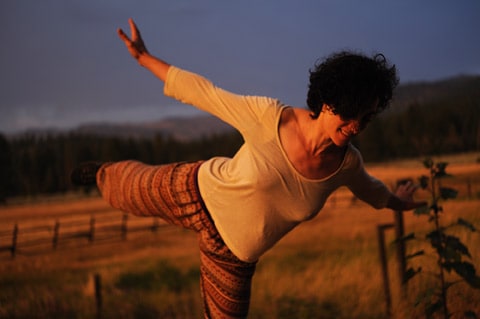
    Photo by AlexaRazma.com
    Photo by AlexaRazma.com

    You’ll spend 13 consecutive weeks in a small, intimate group of five or less learning how to access more strength and alignment by understanding how you mobilize, stabilize and release the spine.

    There are only 2 spots remaining, so act quickly!

    If you prefer to create your own personal toolkit of exercises, make sure to schedule a complimentary consultation. I only have space for 3 of these a week, so book now.

    Use the form below to contact me ASAP!

    [spacer height=”30px”]

    Do you want to use this article on your ezine/blog/site?
    You’re welcome to share this article, as long as you include this complete blurb with it:

    “This is an article from Ophra Wolf, Embodied Wellness Coach and owner of Force & Flow Integrated Bodywork, where she helps high-performers and brilliant visionaries making significant shifts and contributions to their personal, professional and global environments to align with their highest potential. You can subscribe to her fr.ee newsletter and learn more about her unique approach at www.forceandflow.com”

    [spacer height=”20px”]

    [divider style=”medium”]

    [contact-form-7 id=”9407″ title=”Blog Contact Form”]

  • Secrets of Strength Training

    The Strength of Solid Rock
    He’s rock solid, this figure carved into the stone of Petra. He couldn’t flee when earthquakes destroyed the city and his upper half, he’ll never climb the steps or explore this amazing place that he graces…
    [spacer height=”10px”]Nearing the end of a long, arduous Winter and with intense longing for the Spring, my people have been coming in to my studio and inbox and telling me:

    [blockquote]I need to get stronger.[/blockquote]

    And I can help, but it’s rarely by throwing all kinds of strenuous exercises and activities at you. In fact, strenuous exercise when your body’s not ready for it and your mind doesn’t know how to engage in it is more likely to deplete your strength than build it. Especially if you already have a pattern of chronic pain that’s probably stopping you from being as active as you like in the first place…

    How many of you have felt the “I need to do something NOW” panic ring through your body and taken action by going for that run, jumping into that crazy yoga class or lifting some insane weights, only to find yourself in pain, exhausted and not feeling like doing much of anything for the next couple of days or weeks? Or even worse, (re)injured and convinced that you need to forget the venture altogether because you’re likely to end up in even more pain?

    Here are three questions worth taking the time to meditate on – not only can they help you avoid that whole circus, they may show you the way towards the kind of strength that you can cultivate and maintain easily and with pleasure. Yes, strength, easily and with pleasure.

    [blockquote]1. What do you need strength for?[/blockquote]

    Start here. You think about your work and your relationships with great subtlety and nuance, but when it comes to your own body – i.e. the most intimate relationship you have and the vehicle that makes all your other work possible – maybe you’re still thinking in cliches: no pain, no gain; hard muscles = strong body; and so on… Yet I can assure you that pumping your muscles isn’t necessarily going to keep you strong on your feet or comfortable in your chair for hours at a time, and insisting on working through the pain can ending up costing you more hours of relaxed productivity than any other approach.

    But knowing that you need the strength to be able to carry your baby and your groceries, for example, gives you a much better sense of the quality and quantity of strength that you’re looking for.

    It also helps you hone your intention on something practical and meaningful: “I need the strength to _____” is going to get you a lot farther than “I need to get strong”. Your reflexive mind (i.e. body mind) isn’t stupid, it’s actually a much smarter, faster processor than your conscious mind – just imagine if you had to keep your heart beating, lungs pumping and weight balanced with your conscious mind for even five minutes and you’ll understand what I mean.

    When the two minds work together, you get alchemy. If your conscious mind can communicate a clear direction in relationship to the realistic demands that your body faces on a daily basis, your body will respond. Communicate clearly often enough and watch your body increasingly respond quickly, effectively, even effortlessly.

    [blockquote]2. How are you measuring your strength?[/blockquote]

    Tight muscles are often the most vulnerable to injury, and building your muscles to hold and accentuate an imbalanced skeletal alignment is a great way to set yourself up for chronic pain. So I hope you’re not measuring strength by poking at yourself to see how rigid your abs or biceps feel.

    Having a clear intention for how you want to use your strength gives you a much better set of parameters to measure your progress. If you need the strength to make it through a strenuous period of time at work or at home, you can measure the extent to which your current activities are helping you to cultivate the stamina and mindset you need in order to stay healthy, focused and agile. Then you can adjust accordingly.

    For example, if you’re needing to spend extra hours sitting at your desk but the pain in your back is destroying your efforts at creativity and focus, then it’s time to connect to your core and strengthen an alignment that will give you more support. And if being relaxed in the face of demanding clients and colleagues is key to your success right now, then meditative techniques like Qi Gong and restorative Yoga ARE a form of strength training.

    The key is for the parameters you set and against which you measure your strength to be ones that:
    1. Arise from the reality of your needs
    2. Consider your current state (i.e. start from where you are), and
    3. Are linked to an intention that your body, mind and heart can all get behind.

    If you insist on measuring yourself against some kind of ideal body or state that has nothing to do with where you are and with what you actually need right now, you can expect slow and emotionally taxing progress.

    [blockquote]3. Are you crafting your engagement?[/blockquote]

    That’s right, engaging with your body is a creative venture, and that means that there’s constant change in the process and endless discovery to be had. Crafting your engagement means making active and mindful choices not only about what you’re doing, but how you’re doing it, because how you engage in strengthening your own organism has everything to do with how you end up engaging your strength in your social and natural environments.

    If you plan to get strong by working up a sweat on a treadmill while watching a sitcom, then you can expect to strengthen your capacity for mindless exertion of energy and force. If you’re pumping weights without any awareness of alignment and breath, then you can expect to develop misaligned, unsupported strength. If you’re forcing yourself to go to yoga class even though it’s making your hip scream in pain, then you’re cultivating your powers of intimidation and unsustainable strength. Get the gist?

    There’s really no lack of intimidating, misaligned, unsupported and unsustainable strength in the world. And we’re destroying the planet with our insistence on mindless exertion of energy. In our minds we know how wrong it is, in our hearts we’re aching to change these patterns, but in our bodies we continue to strengthen them without realizing what we’re doing.

    So for strength training that goes beyond muscle strength to give you the strength to reach your highest potential and help make the changes you want to see in the world happen, mindfulness is key. And engaging in whatever tiny (i.e. climbing subway stairs) or huge (i.e. training for a marathon) strengthening activity with a flexible, balanced, curious and analytical mindset will likely to lead you to quick and effective progress.

    That’s my mission here at Force & Flow, folks, not just to help you get strong, but to help you discover and connect to the kind of strength that will support you in using your unique and magical talents for making this world a better place.

    If you know you’re ready to get smart about how you get strong and want to learn how to consistently navigate towards your body’s own ideal sweet spot, check out the upcoming semi-private group session, Connecting to Core. This award-winning 90-day package is geared to your individual needs and promises to give you a wealth of tools to find dynamic core strength and fluid breath connection to support you in every aspect of your life. There are only a few spots left, so if you feel like this kind of supremely crafted engagement can help you to cultivate the strength and energy you need to not only experience less pain, but more pleasurable and effective use of your efforts, make sure to reserve your spot ASAP.

    If you want to start off with a focused conversation on your specific needs, sign up below for a complimentary consultation. I do a limited number of these every month, so go on and fill the form out sooner rather than later.

    [spacer height=”10px”]

    [divider style=”medium”]

    [spacer height=”10px”]

    Sign up for a Complimentary Consultation

    [spacer height=”20px”]

    [contact-form-7 id=”10145″ title=”Kickstart_Registration_copy”]

  • Hey Ophra, are you still doing bodywork?

    I’ve been getting this question regularly enough in my inbox recently that I figured it’s time to air it out on the blog.

    The answer is, YES! In fact, I’d reckon I’m a more effective and effulgent bodyworker than ever these days.

    The caveat is that I’m not so available for drop-in bodywork anymore. You see, I’m increasingly reserving the lion’s share of my time for folks who are invested in developing their understanding of their patterns of movement so that they can become connoisseurs of artful self-awareness and agents of transformation for their various pains and chronic ailments.

    So I’m offering fewer “one-offs” and the reasons are definitely selfish – that healthy kind of selfish that allows me to keep doing my thing with skillful pleasure. The fact is that I’m personally energized when I know my time is going to good use, and while I don’t underestimate for a moment the goodness of offering you relief from acute pain or a little TLC to help release the sticky stress and dense fatigue that overtakes us all sometimes, I know that for all your gratitude and joy at the sense of instant transformation, an hour or two of hands on work is rarely enough to keep the pain and discomfort from coming back once you swing back into your habitual modus operandi.

    In fact, I don’t even have one-off bodywork sessions listed on this website right now, but I’ve built myself a name as a blissful bodyworker and when people write or call to ask, I like to say yes, time and energy permitting. Rates are different than the packages listed on the Individuals page because the nature of the session and of my investment is also different – unlike the premium packages where I’m dedicated to giving you the tools and attention to experience true and lasting transformation, in a bodywork session we just get down to the business of hands-on adjustments.

    If you decide that you want to go further and deeper with the work, I’m here. Sometimes we need a little hands-on relief to remember that we want to feel better more often and that we’re willing to invest in getting ourselves to that place!

    If you’ve never been for a bodywork session with me before, I always recommend 90 minutes to begin with, but I won’t turn you away if you feel like 60 minutes is all that you’re up for.  For the time being, when they are available, first sessions are $150 for 60 minutes or $200 for 90 minutes. After that it goes down to $125/$180 respectively. (P.S. this doesn’t pertain to abdominal massage, which is a different beast for a different blog post…) Some of these precious spots are reserved for sliding-scale clients, you know who you are.

    Oh, and I’m still in Thailand with my Medical Qi Gong teacher, but I’m already taking appointments for when I’m back on Feb 4, so go ahead and use the form below to write me.